How to improve your running form
Can I improve my running by improving my form?
Probably. But let’s take a step back first…
My first question to you would be: why do you want to improve your running?
If it’s just about wanting to run faster, the easiest way to see an improvement is simply by getting fitter. As simple as it sounds, the challenge here is staying injury-free long enough to see fitness benefits.
If we look at running form through the lens of injury prevention, we can indirectly assist in the process of improving economy by removing a potential barrier.
It’s also true that almost all runners would likely see some benefit by optimising running form and therefore improving the efficiency of each step.
How to stay injury-free and improve your efficiency
There is a lot of information out there, some of which is helpful and some which isn’t.
The approach I take to improving a runner’s form focuses on reducing the impact (or existence) of over-use injuries (so you can focus on getting fitter) and improves the efficiency of your step.
So what does improving your running form look like?
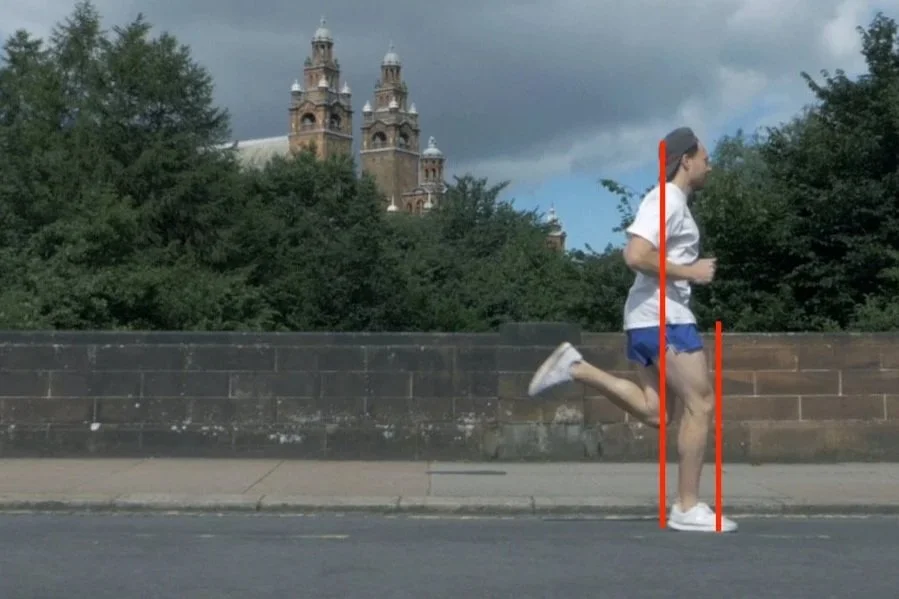
By visually analysing a runner’s form, I look for optimal head position, how the foot contacts the ground and everything in between those two points (running isn’t just about your legs!). Things like range of motion, cadence and posture tell me a lot about which joints might be overused as well as any mobility restrictions and strength imbalances or deficits.
Once these are identified, we can get to the root cause of any sub-optimal movement patterns that might be holding you back and help us make a plan. This normally consists of a blend of specific remedial strength exercises, mobility exercises and running drills.
To really get the most out of your training and improve your running form, it’s important to consider all these elements together. One alone will be limited in its effectiveness…
Strength and mobility exercises help give us the potential to hold good form. The drills help our central nervous system understand the movement patterns required for good form over thousands of repetitions. All of this - plus time and patience will eventually cross over into our natural running patterns.
Natural and organic change is important, rather than actively forcing a new movement pattern which is just going to create more tension in the body and decrease your running efficiency and economy.
So what do we look for in running to improve our form?
Physics tells us we want to contact the ground on a pronated foot, directly under the hips and to avoid over-striding.

The force we apply into the ground should be 80% vertical and 20% horizontal. This is how the body is designed to maximise float through our stride as our incredible tendons absorb and return multiple times our body weight in around 0.25 seconds.
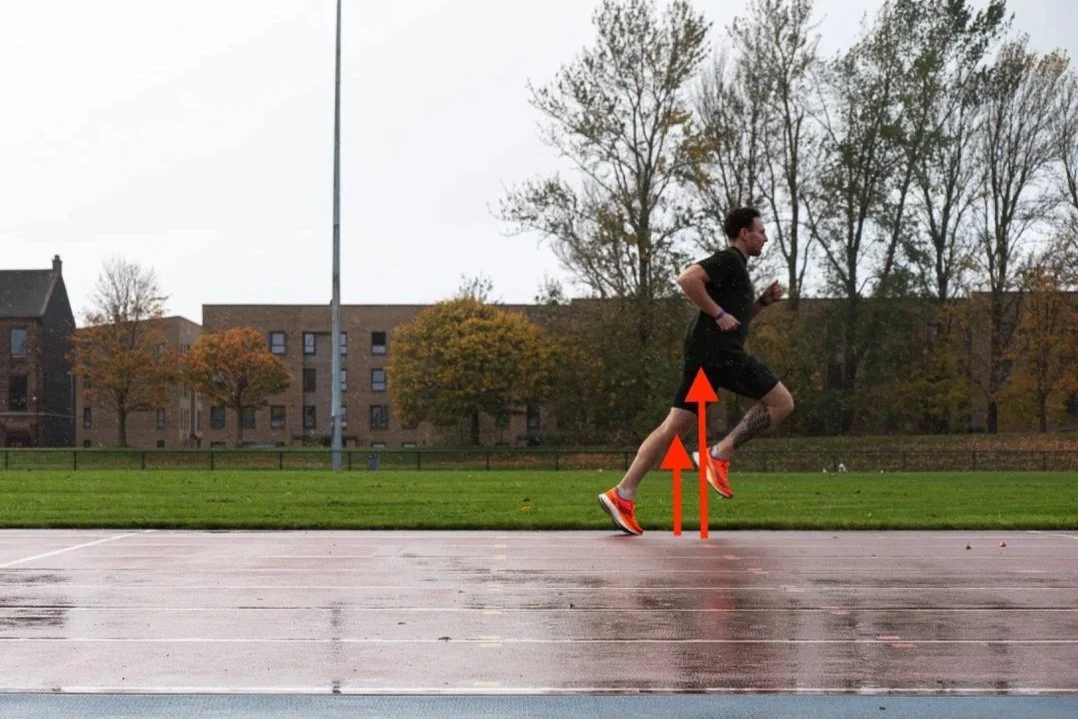
That means more time off the ground flying through the air and less time dragging along the ground using up valuable metabolic resources in the muscles.
For this to happen, there’s a cascade of perfect balance, strength and stability from the head down required as the body spirals from the centre out. Interestingly, we learn it as children and unlearn it as we cover our feet in shoes and spend our lives in chairs. Look closely enough at someone running and you won’t see a single straight line. And that’s exactly how it should be.
So if you’re thinking about trying to change or improve your running form, ask yourself this: is it because you want it to look pretty like someone on the internet? Or is it because you want to find your body’s most efficient and economical way of moving over the ground?
Making your body strong, resilient, stable and balanced is the key to figuring out how to move in tune with your body’s natural mechanics and improve your running from.
Want to know more? Let’s have a chat.